
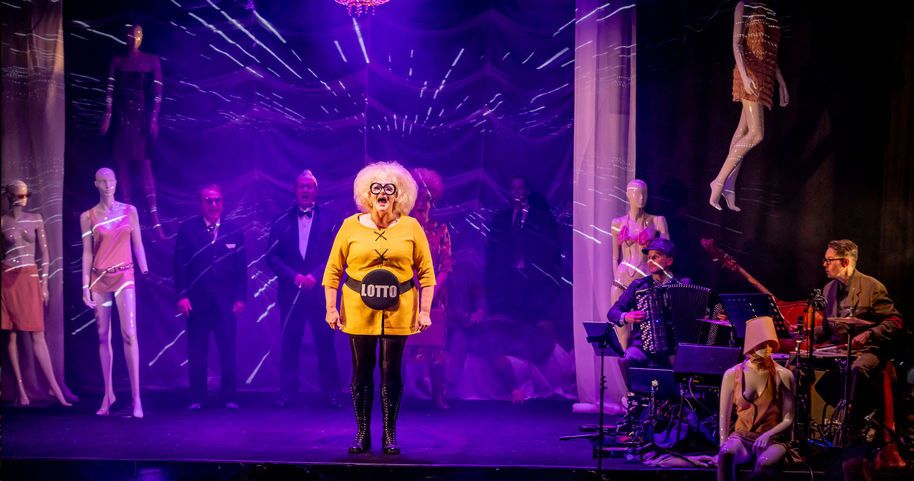
In theatre, people watch the same event, empathize with the characters, experience emotions, and interpret what they see through their own experiences and memories. At the same time, they are part of an audience whose reactions can influence both other spectators and the performers. Theatre thus offers an exceptionally interesting setting for studying human experience and behaviour.
Researchers at Aalto University and theatre professionals have joined forces to investigate these questions. In a recent study published in PLOS ONE, they examined audience experiences across 20 performances of the musical play UKK at Helsinki Music Theatre Kapsäkki. The study collected nearly 1,900 immediate audience evaluations and 458 more detailed survey responses, exploring, among other things, the emotions and thoughts prompted by the performance and audience experiences of its artistic elements.
The results showed that reception of the same production varied from one performance to another. Spectators who saw the same performance also experienced it differently. One person might enjoy the music and acting but feel detached from the story, while another might find that the performance prompted personal memories, strong emotions, or thoughts about Finnish history. In addition, smaller audiences rated the performance slightly more positively on average than larger ones.
What gives rise to these differences? What role do spectators’ previous experiences, expectations, and emotions play? And how do the events onstage, the reactions of other spectators, and the interaction between performers and audience shape the experience? The study does not yet answer these questions, but it shows that experiences in the theatre can be studied systematically in real performance settings.
Theatre is also particularly interesting for research on human experience and behaviour because it brings together many phenomena that are usually studied separately: emotions, attention, memory, social interaction, and the interpretation of a shared situation. In addition, theatrical performances can be designed and modified for experimental purposes. In the future, this could make it possible to study, for example, how different events give rise to emotions or how interactions between people affect their experiences.
The study was carried out through collaboration between Aalto University researchers and theatre professionals. The theatre professionals participated in designing and conducting the study and are also authors of the scientific article. This collaboration is important because artists’ understanding of how a performance is constructed, its dramaturgy, and audience reactions complements the researchers’ experimental methods. The study also examined how information collected from audiences can be used in artistic work without reducing the value of art to numbers.
The collaboration is connected to the development of Aalto University’s MAGICS research infrastructure. The next step is a research environment to be built at Marsio on the Otaniemi campus, where theatrical performances can be combined with measurements of human behaviour, such as gaze, facial expressions, movements, and physiological responses. Another goal is to develop performances designed to investigate specific psychological and social phenomena.
The significance of theatre for research on human experience and behaviour is therefore not limited to how audiences experience art. It offers an opportunity to study people in complex, meaningful, and social situations—the kinds of situations in which much of our everyday life takes place.
The study was published in PLOS ONE on October 22, 2026:
Sams el al. (2026). Measuring audience experience across 20 showings of the same theatre performance using customer feedback kiosks and a questionnaire.